

A PSA from Colin Meredith
Relax: Synthetic fitness gear is better than okay.

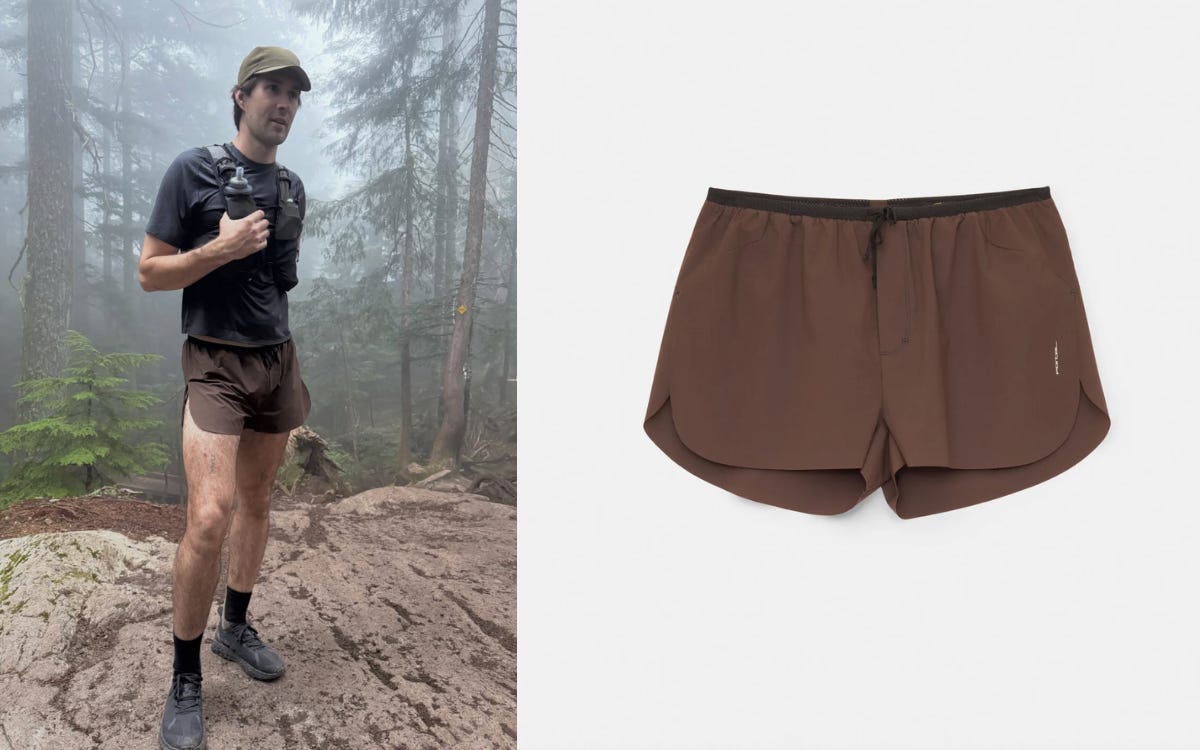
There’s a lot of talk these days about “natural activewear.” Polyester, or so the viral reels claim, is terrible for both your body and the environment. Nylon is seeping into our bloodstream. Esquire, introducing a new guide to sustainable running shorts, threatened that there might even be a link between synthetic workout gear and infertility—but then named a liner-free cotton short as the best overall pick, without addressing that most guys would still therefore likely be wearing synthetic boxer briefs in-between.
Still, when the brand imagery inspiring these conversations actually looks great, too (I’m thinking about H-O-R-S-E here, who just appeared in Laura’s latest brand rank) it’s tempting to wonder if there might really be a there there.
All of this is why, scrolling Instagram recently, I was intrigued to see a comment the designer Colin Meredith had left on a reel warning of the pitfalls of this shift. “Yes!” Meredith began. “We invented/use polyester for a reason.” (He went on to talk about the hydrophobic qualities of spandex and polyester, which is the exact kind of wonkery that makes me trust his thoughts in the first place.)

Barely thirty, the Vancouver-based Meredith is already a veteran of the performance world. During apparel design stints at Arc’teryx, Reigning Champ, and Rapha—with a contribution or two to Virgil Abloh’s Louis Vuitton along the way—he learned everything there is to know about what certain fabrics can (and can’t) do. And as his Instagram attests, he’s also a serious runner himself.
Meredith also has nothing against natural fibres: His own line is full of cottons, hemps, and merino wools, even as his co-founded second child, the performance-minded Portal, swings the other way. Given that part of my aim here is to extract knowledge from people who’ve really put in the time, I wanted to get his take on this conversation (and to be reassured that my gifted, so far unkillable, six-year-old Vuori gym shorts don’t need to be sacrificed any time soon.)
“It’s not even the first comment like that I've made” Meredith said with a smile when I called him yesterday. “I responded to a TikTok, too, just making a very similar PSA that it’s not a done deal with this cotton trend. I wish we could only use natural fibres for activewear, but the reason synthetic fibres exist is because natural ones simply do not perform.”
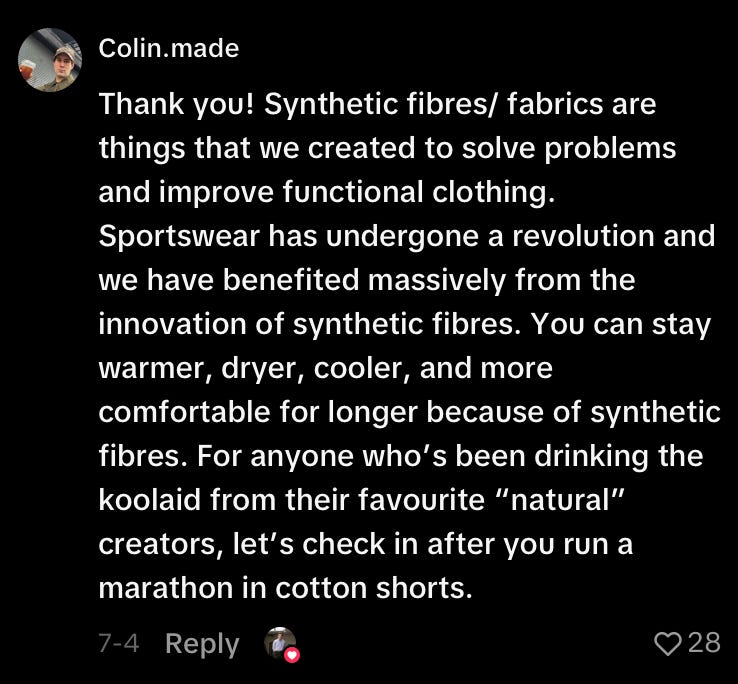
“The way synthetics manage moisture content is night and day,” he adds. “Polyester is at least 10 times better at wicking moisture from your body than cotton, for example. If you stop for a snack, it’ll dry while you’re taking that break. Cotton will not. Instead, you’d be chafing before you were done.”
Environmentalists, understandably, counter this with the argument that performance materials barely degrade, instead taking hundreds of years to decompose. This is true: Meredith’s dad keeps asking him for hand-me-ups of his six year-old, frequently washed Reigning Champ workout tees, because they still look brand new today.

But as Meredith sees it, we can’t exercise naked, and owning a few synthetic pieces you get decades of wear from is a more sustainable play than buying a whole bunch of cotton ones you won’t actually use once you’ve realized the synthetics just work better. “My constant strategy for sustainability,” he says, “is to make a product that’s good enough that someone can wear it for the next five or ten years.” At Portal, he’s using almost entirely synthetic fibres for the collection, “but that’s because we’re trying to make really effective sportswear that people can use and wear and wash and get a lifetime of use out of, and be comfortable making a major sporting effort in.”
That’s the other thing here: If you’re working out as a way to improve your physical and/or mental well-being, you want your clothes to support those efforts, rather than encourage premature discomfort.
He's also doubtful that sustainability concerns alone are driving the founders of the all-natural brands he’s been receiving Instagram ads for. “The labels pushing cotton workout gear are just as profit-minded as the ones selling synthetics,” he jokes. “At the end of the day, it’s still a marketing pitch, with someone trying to convince you that they have a better hold on the science, so you should spend your money with them.”

If you want to knowingly critique synthetics, he advises, focus instead on the way those fabrics are being held together. “People are using a lot of glue to manufacture synthetic-based garments these days,” he warns. “It’s become a big trend across the industry to use adhesives to seal the seams together, and when people complain about synthetic garments deteriorating, it’s my hunch that they’re referring to the glued seams falling apart. Our pieces at Portal, like Reigning Champ’s for example, are sewn together with polyester thread. They have no glued components, which is why they last.”
Before I let Meredith go, I wanted to quickly ask him what he’s getting the most wear out of this summer. His answer: The Ambit running short, the Drift Merino tees, and HOKAs on the feet—specifically the Clifton and Bondi lines, for city runs. If his intel here has made you at all curious about his lifestyle line, I like the red zip-up sweater (worn by me above), baseball-inspired T-shirt, plaid messenger bag, and while I’m not sure I’d wear it myself, the surprisingly low price of this very fuzzy V-neck. But most of all, I like that he’s just saved us all some time on a redundant gym drawer refresh.